Cities built for a drier century
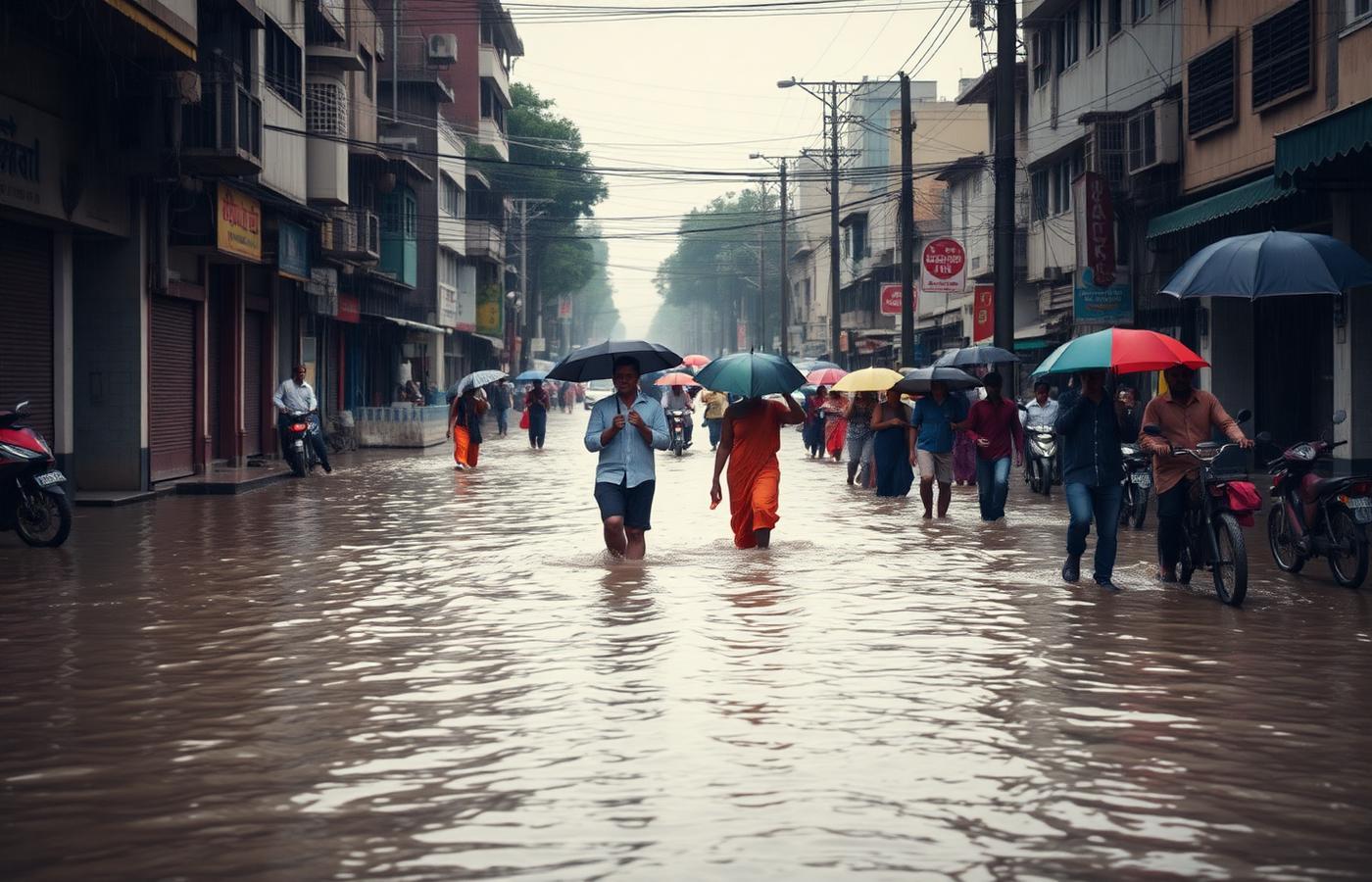
Drainage systems designed decades ago for gradual seasonal rainfall are now meeting monsoons that arrive in shorter, far more intense bursts — and the failure points are concentrated in the oldest, lowest-lying wards of India's largest cities.
Published Yesterday, 18:20 IST · Updated Today, 07:00 IST · 7 min read
In 30 seconds
- A ward-level review of drainage capacity finds repeated failures concentrated in older infrastructure.
- Rainfall intensity, not total seasonal rainfall, is emerging as the real stress point.
- Maintenance records across wards are inconsistent, complicating comparisons.
The story
The city's storm-water network was largely engineered in phases stretching back to the 1960s, sized for a monsoon that delivered its rainfall gradually across the season. That assumption no longer holds: meteorological data over the past decade shows an increasing share of seasonal rainfall now arriving in short, high-intensity bursts of a few hours rather than steady daily accumulation.
When a drainage network built for gradual absorption meets several hours' worth of rain compressed into a single afternoon, the failure is immediate and visible: waterlogged arterial roads, backed-up stormwater drains, and low-lying residential pockets that flood even when the surrounding areas stay largely dry.
A ward-by-ward review of flooding incident reports over the past three monsoon seasons shows the failures cluster overwhelmingly in a identifiable set of low-lying wards with the oldest storm-water assets — many of them areas that were on the city's periphery when the drainage network was first laid and have since been absorbed into dense urban cores.
"We keep discussing capacity as if it were purely an engineering problem, but half of what we're seeing is inconsistent desilting and maintenance scheduling," said an urban infrastructure researcher who has advised municipal bodies on adaptation planning. "A well-maintained smaller drain can outperform a larger one that hasn't been cleared before the monsoon."
Municipal officials counter that maintenance budgets have in fact increased in recent years, and argue the more binding constraint is capacity itself — retrofitting drainage networks in dense, already-built neighbourhoods is far more expensive and disruptive than building fresh capacity in newer areas.
The dispute matters because adaptation budgets are finite, and the choice between funding maintenance versus funding capacity expansion will determine which neighbourhoods are protected first as rainfall patterns continue to shift.
Key numbers
112 mm
Peak 3-hour rainfall recorded in the worst-hit ward
During the most recent major flooding event, per municipal rain-gauge data
1960s
Design era of the oldest sections of the affected drainage network
Per municipal engineering department records
23
Wards flagged for repeated flooding over three seasons
From municipal incident reports
What they said
“We keep discussing capacity as if it were purely an engineering problem, but half of what we're seeing is inconsistent desilting and maintenance scheduling.”
What we know
- Flooding failures cluster in a defined set of low-lying wards with the oldest infrastructure.
- Maintenance records across wards are inconsistent, making comparisons difficult.
The Scope
What happened · Why it matters · What's nextWhat happened
A ward-level review of flooding incidents shows repeated failures concentrated in areas with the oldest drainage assets.
Why it matters
Adaptation budgets are finite; knowing precisely where failure concentrates determines which neighbourhoods are protected first as rainfall patterns intensify.
What we know
- Flooding failures cluster in a defined set of low-lying wards with the oldest infrastructure.
- Maintenance records across wards are inconsistent, making comparisons difficult.
What's disputed
- Whether capacity limits or maintenance shortfalls are the larger driver of repeated flooding.
What's next
- 01Upcoming municipal budget allocations for drainage.
- 02Publication of the pre-monsoon infrastructure audit.
Sources
- Primary documentMinistry briefing note circulated to reportersDistributed at the post-meeting press briefing.
- Official statementOfficial spokesperson statementDelivered on the record to the press pool.
- ReportingBharatScope field reportingOriginal interviews and on-the-ground verification by BharatScope correspondents.
Scope modules are editorial context written by the newsroom. AI-assisted summaries, where used, are labelled and based on cited reporting.
Sources
- Primary documentMinistry briefing note circulated to reportersDistributed at the post-meeting press briefing.
- Official statementOfficial spokesperson statementDelivered on the record to the press pool.
- ReportingBharatScope field reportingOriginal interviews and on-the-ground verification by BharatScope correspondents.
Corrections: none recorded for this story. Original reporting is distinguished from AI-assisted context throughout.